Drinks · Recipes · Technique
Matcha Powder Guide
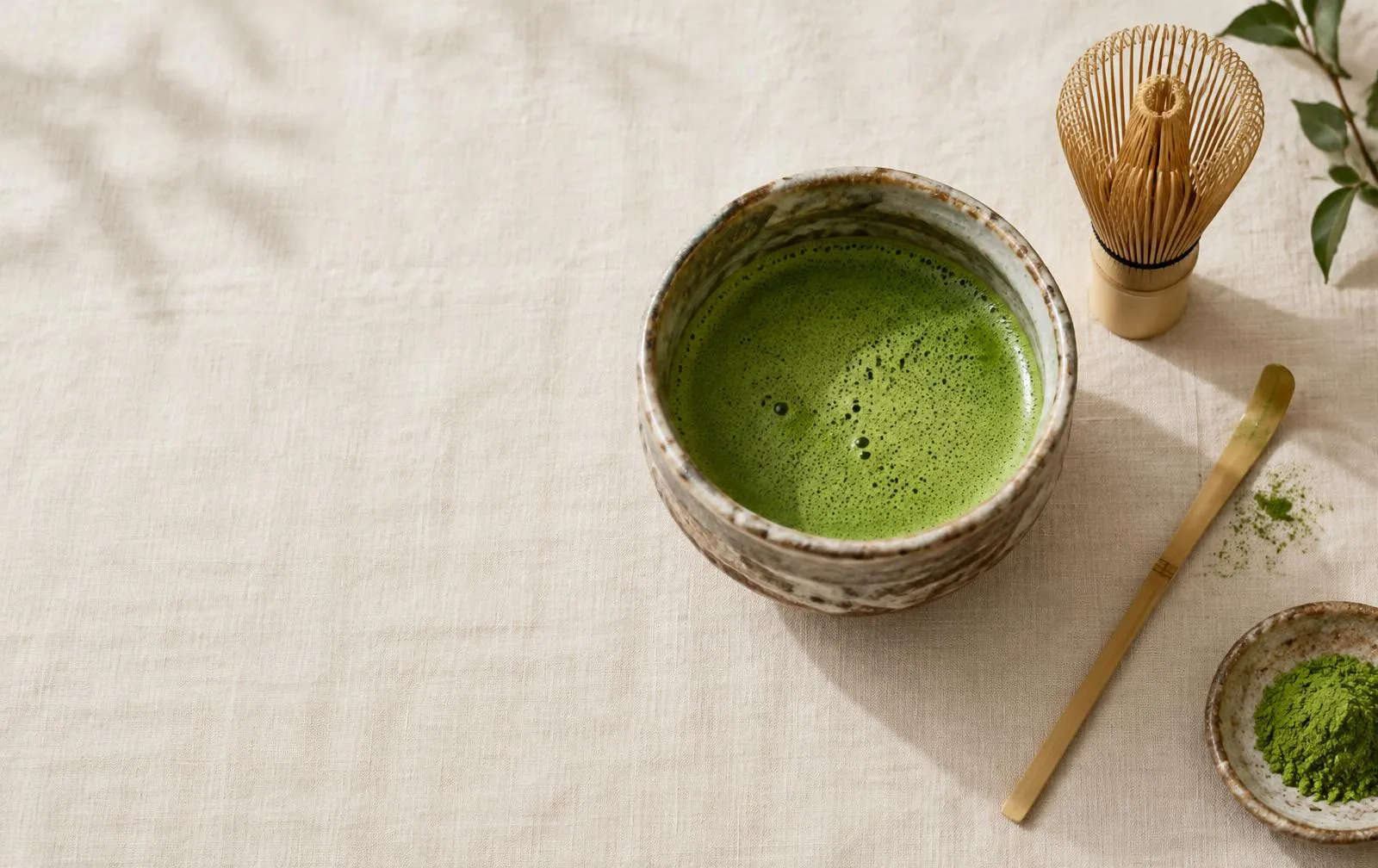
Matcha powder is finely ground Japanese green tea, whisked into water rather than steeped. Choose a fresh powder, master the ratios and make café-quality lattes and desserts at home.
- Instant download after purchase
- Secure checkout with card or PayPal
- Printable PDF guides, yours to keep
Matcha guides and recipe books to download
All 15 guides →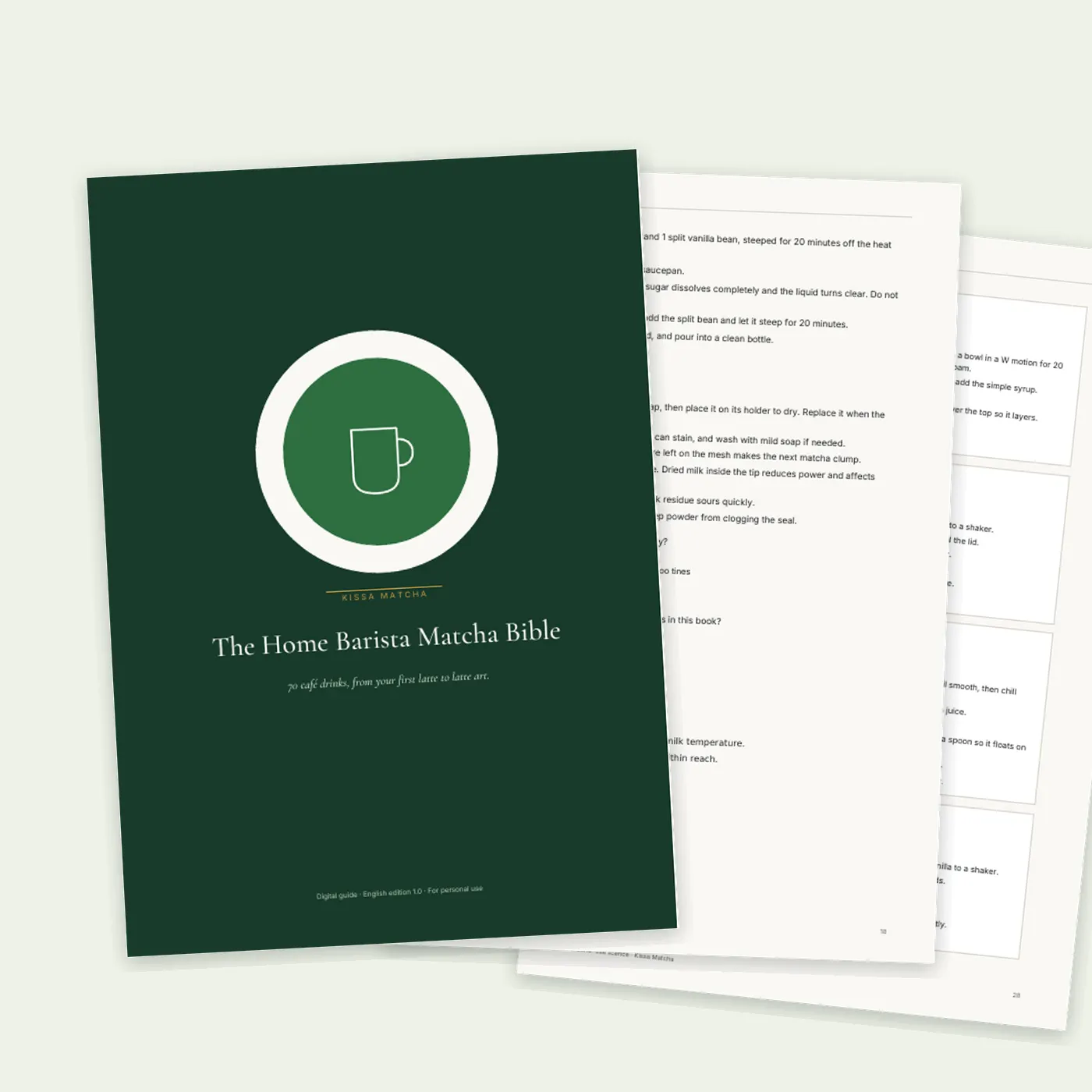
The Home Barista Matcha Bible
70 café drinks, from your first latte to latte art.
$27
Instant download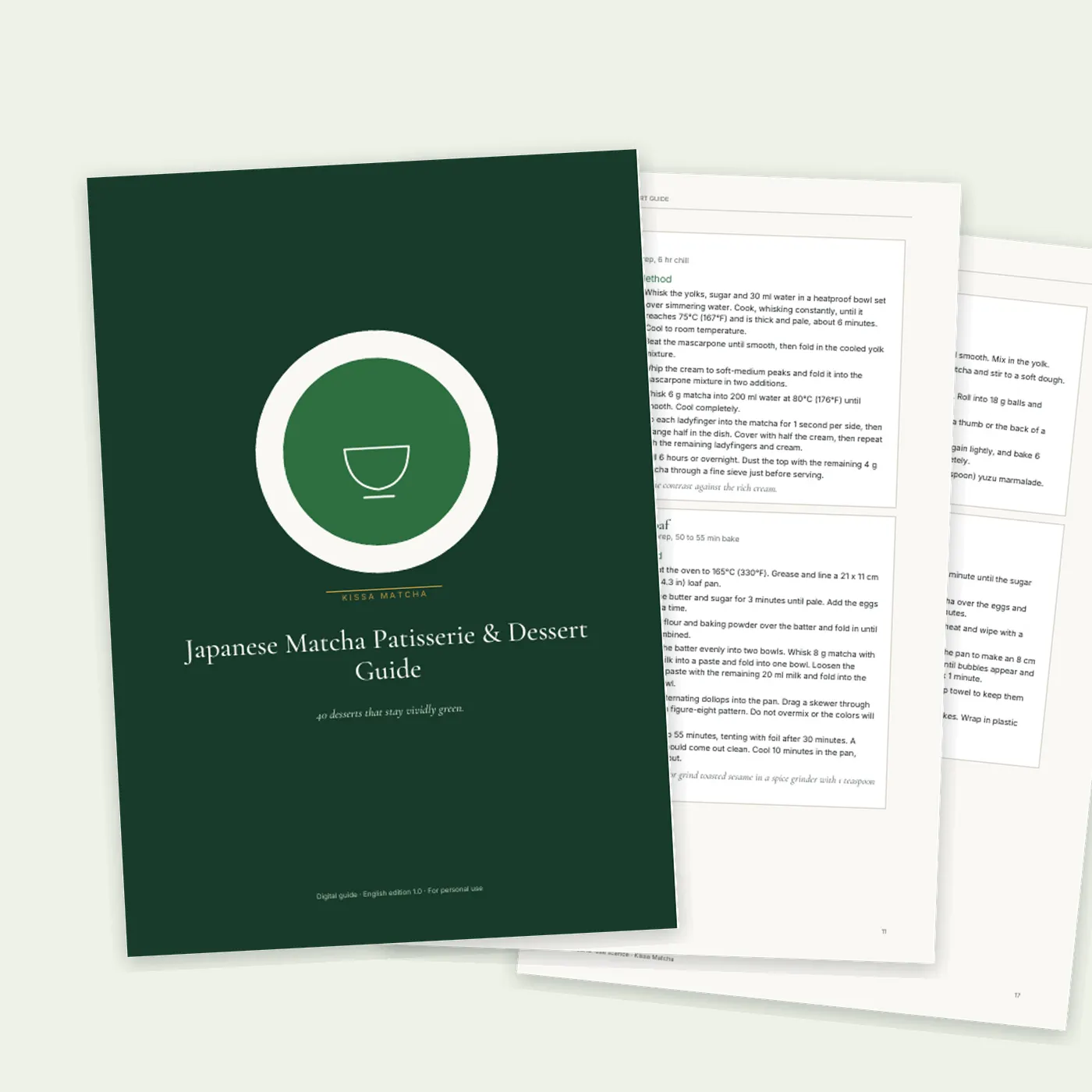
Japanese Matcha Patisserie & Dessert Guide
40 desserts that stay vividly green.
$25
Instant download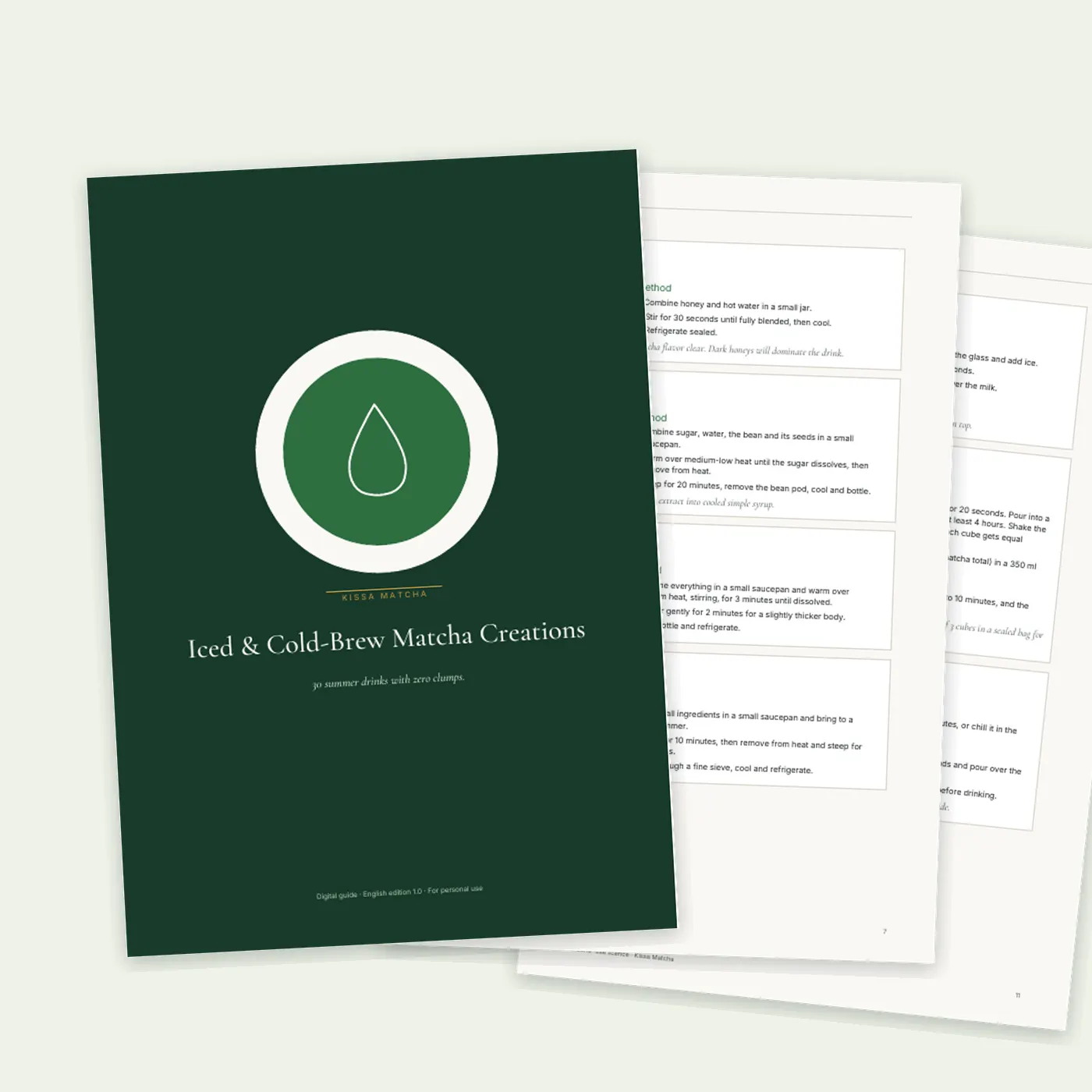
Iced & Cold-Brew Matcha Creations
40 summer drinks with zero clumps.
$19
Instant download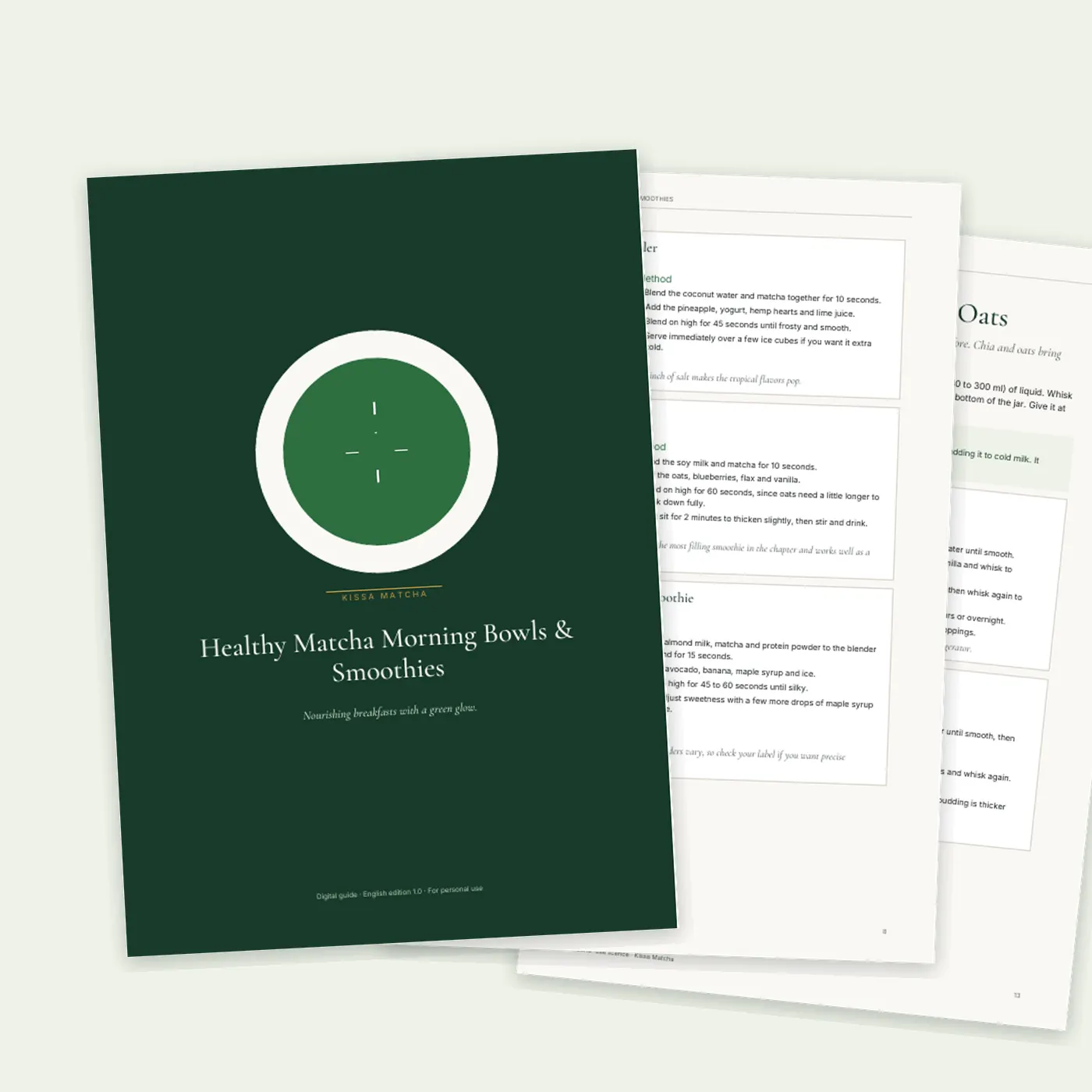
Healthy Matcha Morning Bowls & Smoothies
Nourishing breakfasts with a green glow.
$21
Instant download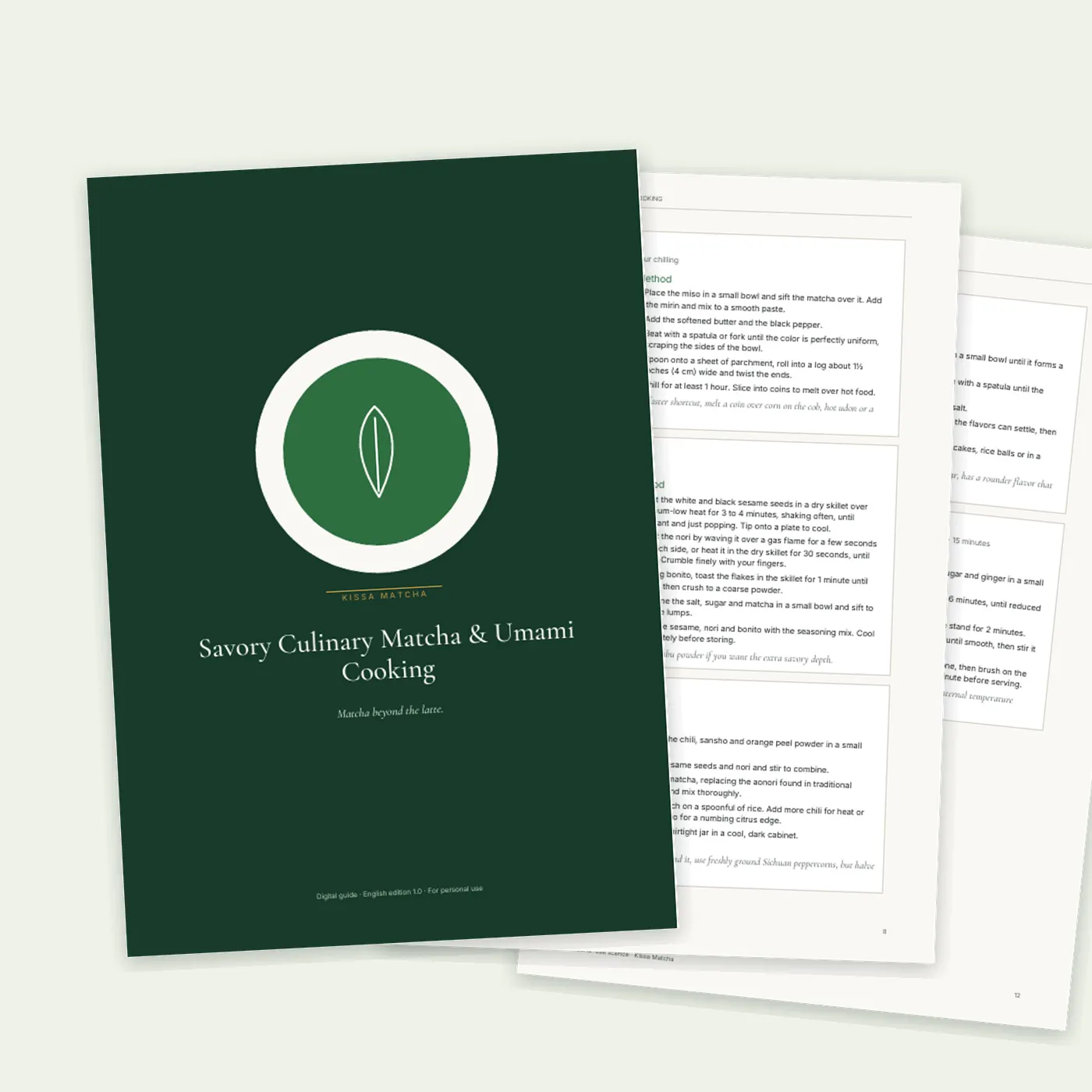
Savory Culinary Matcha & Umami Cooking
Matcha beyond the latte.
$24
Instant download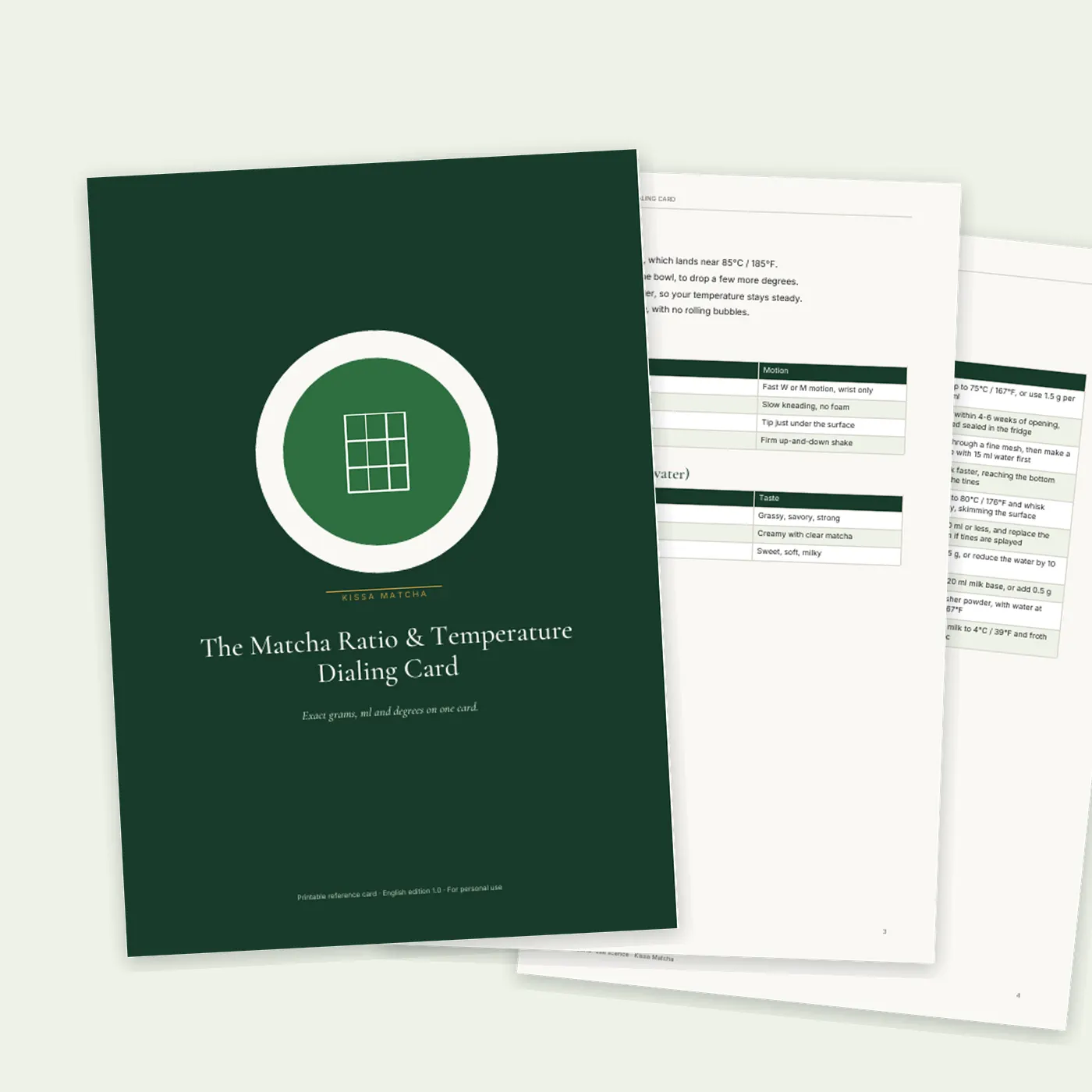
The Matcha Ratio & Temperature Dialing Card
Exact grams, ml and degrees on one card.
$9
Get every Matcha Powder Guide guide in one download
All 14 guides, recipe books and tools in the Connoisseur Vault for $97, instead of $351 bought separately.
Three ways into matcha
Drinks & Lattes Hub
Matcha Drinks
Matcha drinks come down to three decisions: how much powder, how hot the water, and what you pour over it.
6 guides →
Desserts & Baking Hub
Matcha Recipes
These matcha recipes cover the sweet side of the leaf: baked cheesecake, cookies, no-bake tiramisu and a make-ahead chia pudding.
6 guides →
Technique & Equipment Hub
How to Make Matcha
How to make matcha comes down to four things: a fine, fresh powder, the right ratio, water around 75°C (167°F), and a tool that suspends the powder evenly.
6 guides →
What Is Matcha Powder?
Matcha powder is finely stone-ground green tea made from tencha, tea leaves grown under shade for roughly three to four weeks before harvest, then steamed, dried and stripped of stems and veins. Shading raises chlorophyll and amino acids such as L-theanine, which give good matcha its deep green color, sweet umami and soft, savory finish. Because you whisk the whole leaf into water instead of steeping and discarding it, a cup of matcha tastes richer and holds more caffeine than most brewed green teas.
Matcha Powder Guide is about getting that cup right at home: the right water temperature, a smooth hot matcha latte, and matcha recipes that keep their color in the oven.
Start Here: Your Path to Better Matcha
- Learn the basics: how to make matcha with a bowl, whisk and the right ratio
- Make your first café drink: an iced matcha latte in five minutes
- Fix lumps for good: how to sift matcha
- Bake with it: a matcha basque cheesecake
- Keep it fresh: how to store matcha so it stays bright green
Measured, not mystical
Every page gives exact grams, millilitres and degrees, explains why a method works and says plainly where tea knowledge ends and marketing begins. No health hype, no invented reviews, just a better cup.
Our approach →Frequently asked questions
What does good matcha taste like?
Good matcha tastes sweet, grassy and savory, with a creamy body and a gentle bitterness that fades quickly. Harsh, fishy or dusty flavors usually mean low quality, stale powder or water that is too hot. Color is a useful clue: vivid jade green tends to taste better than dull yellow-green.
Is ceremonial grade matcha worth it?
For drinking matcha straight with water, a higher grade is worth it because sweetness and umami are on display. For lattes, a good mid-range matcha works well, and for baking a culinary grade is fine. Grade names are not regulated, so judge by origin, harvest, color and freshness.
How much caffeine is in matcha?
A typical 2 g serving of matcha contains roughly 50 to 80 mg of caffeine, depending on the leaf and the grade. That is less than most espresso drinks. Matcha also contains L-theanine, an amino acid that many people find makes its energy feel calmer.
Do I need a bamboo whisk to make matcha?
A bamboo chasen gives the finest foam and the smoothest texture, especially for straight matcha. For lattes, a handheld electric frother or a shaken jar works well. Whatever you use, sift the powder first and add a little water before the rest to avoid clumps.